


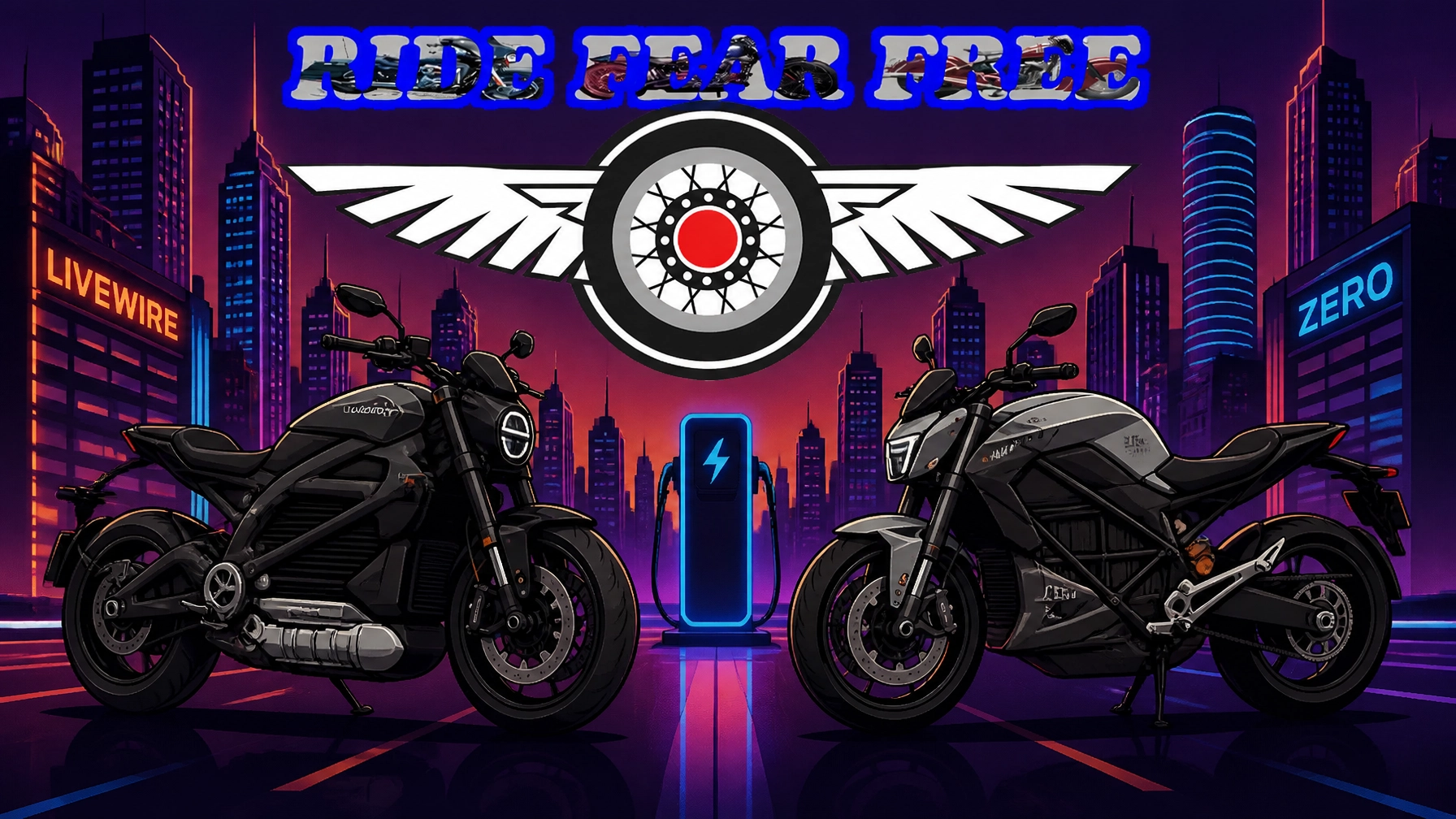
There is a specific kind of silence that only an electric motorcycle rider truly understands. It’s not the absence of sound, but rather the presence of something else: the high-pitched whistle of a stator, the faint hum of a belt drive, and the sound of the wind that usually gets drowned out by a screaming four-cylinder engine. I remember my first morning commute on an electric rig; I could actually hear the birds in the park I was passing. It changed my perspective on the daily grind.
In the world of electric motorcycle news, two titans have consistently traded blows for the top spot in the commuter market: LiveWire and Zero Motorcycles. While Zero was the scrappy pioneer that proved electric bikes weren't just golf carts with two wheels, LiveWire: spun off from the legendary Harley-Davidson: brought a level of industrial "heavy metal" polish to the segment.
If you are looking to ditch the gas station and embrace the plug, the choice usually comes down to these two. But which one actually makes your Monday-through-Friday trek better? Having spent significant seat time on both platforms, I’ve broken down the trade-offs between "the heritage of the bar and shield" and the "Silicon Valley efficiency."
The Contenders: A Tale of Two Philosophies
When we talk about these brands, we aren't just talking about batteries and motors; we’re talking about lineage. LiveWire inherits the DNA of Harley-Davidson: a brand I've followed closely, from their AMF-era struggles to their modern performance benchmarks. Their bikes feel overbuilt, heavy, and undeniably premium.
On the other side, Zero Motorcycles represents the lean, tech-first approach. They don’t have a century of internal combustion history to pivot away from, which has allowed them to iterate rapidly. Their bikes are often lighter, more efficient, and offer a wider variety of price points.

The Urban Ninjas: Zero S vs. LiveWire S2 Del Mar
For many of us, the commute doesn't involve 50 miles of open interstate. It’s a 15-mile dash through stoplights, lane-filtering, and tight city corners. This is where the "entry-level" (though I use that term loosely given the performance) models shine.
The Zero S: The Practical Choice
The 2024/2025 Zero S is arguably the most sensible commuter on the market. It’s a standard bike in the truest sense: upright ergonomics, approachable seat height, and a weight that doesn't intimidate. With a 14.4 kWh battery, it offers a real-world city range of about 150 miles. If your commute involves surface streets and the occasional highway bypass, the Zero S is hard to beat for the price (around $15,000).
The LiveWire S2 Del Mar: The Soulful Sprinter
The S2 Del Mar is a different beast. It’s a flat-track-inspired urban weapon that prioritizes torque and "flickability." When I twisted the throttle on the Del Mar for the first time, the 194 lb-ft of torque nearly pulled my arms out of their sockets. It’s punchy, aggressive, and undeniably more "fun" than the Zero S. However, the trade-off is the battery. At 10.5 kWh, you’re looking at a significantly shorter range: especially if you spend time at 70 mph. For a 40-mile round trip, it’s a dream; for anything longer, you’ll be watching that percentage bar with a bit of anxiety.
The Long-Distance Heavyweights: LiveWire One vs. Zero SR/F
If your commute looks more like a high-speed transit run, you need the flagship models. This is where the technical nuances of charging and battery management become the deciding factors.
LiveWire One: The DC Fast-Charge King
The LiveWire One is an iconic piece of engineering. It’s heavy (around 550 lbs), but it carries that weight low, making it feel more planted than even a BMW S 1000 RR in a straight line. The real "ace in the hole" for the LiveWire One is DC Fast Charging.
I can’t overstate how important this is for a high-performance commuter. If you forget to plug in at night or need to run an errand after work, you can hit a Level 3 station and go from 0% to 100% in about an hour. Most other electric bikes (including the Zeros) rely on Level 2 AC charging, which is great for overnight but slow for a "quick splash" of energy.
Zero SR/F: The Refined Athlete
The Zero SR/F is the most sophisticated bike Zero makes. It’s lighter than the LiveWire One and feels more like a traditional naked sportbike. Its Cypher III+ operating system is top-tier, allowing you to customize everything from regenerative braking to throttle response via a very slick app.
For the commuter, the SR/F offers the largest battery capacity in this group (17.3 kWh in recent models). This gives you a massive range buffer. While it lacks DC fast charging, its 6.6 kW onboard charger means you can fully top it off at any standard J1772 station (like the ones found at many offices or malls) in about two hours.

The Charging Reality: CCS vs. J1772
Let’s talk logistics, because this is where the "quantity vs. quality" argument truly manifests.
- LiveWire One uses a CCS connector. It’s the same standard used by most non-Tesla electric cars. It does not support standard Level 2 AC charging (the kind you find at a typical public pedestal). You either use a standard wall outlet (Level 1) or a DC Fast Charger. This is a bold move: it assumes you have access to fast charging if you aren't at home.
- Zero and LiveWire S2 models use the J1772 Level 2 standard. This is the "universal" language of workplace and shopping center chargers. For most commuters, this is actually more convenient. You plug in at work, and by lunchtime, you’re back to 100%.
Ergonomics and Daily Liveability
A motorcycle commute is about more than just speed; it’s about how you feel when you get to the office.
The Zero models tend to feel "skinnier." Between your knees, they feel like a middleweight naked bike, making them easy to maneuver through heavy traffic. The seat on the Zero S is surprisingly plush for a daily rider.
The LiveWire One, conversely, feels muscular and wide. It has a premium tactile feel: the switches, the haptic "pulse" of the motor when it's on but stationary, and the finish of the paint all scream high-end. If you've been following new motorcycle releases, you know that build quality can vary wildly, but LiveWire is clearly aiming for the top shelf.

Technical Analysis: The Performance Metrics
| Feature | Zero S (2025) | LiveWire S2 Del Mar | LiveWire One | Zero SR/F |
|---|---|---|---|---|
| City Range | ~154 miles | ~113 miles | ~146 miles | ~180 miles |
| Highway (70mph) | ~80-90 miles | ~43-50 miles | ~70-80 miles | ~90-100 miles |
| Top Speed | 104 mph | 103 mph | 110 mph | 124 mph |
| Charging | Level 2 (AC) | Level 2 (AC) | DC Fast (CCS) | Level 2 (AC) |
| Weight | ~490 lbs | ~436 lbs | ~555 lbs | ~500 lbs |
The Verdict: Which One Wins?
Choosing between these two brands is like choosing between a high-end digital camera and a classic Leica. One is a powerhouse of efficiency; the other is a statement of design and character.
Go with Zero if…
- You have a long commute: The Zero SR/F’s 17.3 kWh battery is the gold standard for range buffer.
- You want value: The Zero S offers more "miles per dollar" than almost anything in the electric world.
- You charge at work: The ubiquitous J1772 compatibility makes workplace charging a breeze.
Go with LiveWire if…
- You want soul: The S2 Del Mar is, quite frankly, the most fun you can have on two wheels in an urban environment.
- You need DC Fast Charging: If you’re the type of person who forgets to plug in at night, the LiveWire One is the only bike that can save your morning with a 20-minute fast charge.
- You appreciate build quality: The fit and finish of the LiveWire One is significantly ahead of the Zeros, justifying its higher price tag.
Personally, for my daily dash, I lean toward the Zero SR/F. The range peace of mind is simply too hard to ignore when you're facing a headwind on the interstate. However, every time I see an S2 Del Mar in that iconic "Himalayan White," I question my practical side.
If you’re in the market for an electric commuter, my advice is to test ride both. The "electric" experience is universal, but the way these two companies deliver that torque is worlds apart. Whether you’re coming from a high-performance Honda or looking for your first bike, the electric revolution is here, and it's surprisingly quiet.


